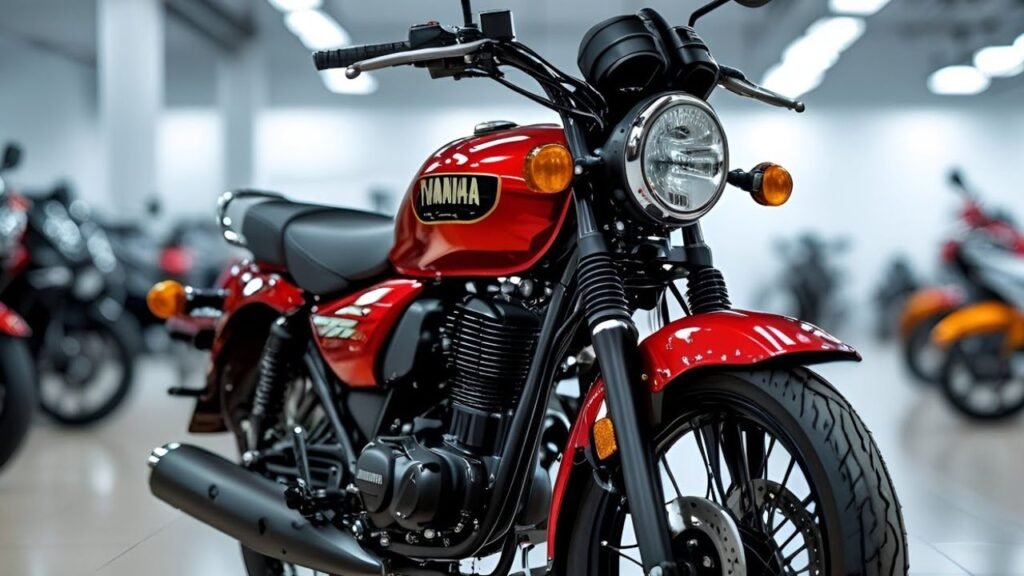

When we talk about motorcycles that created history in India, one name always comes on top – Yamaha RX100. This bike is not just a two-wheeler; it is an emotion for millions of Indians who grew up in the 80s and 90s. For youngsters of that era, owning a Yamaha RX100 was nothing less than a dream. Its iconic sound, raw performance, and timeless design made it an unbeatable king of the roads.
Now, after decades, the Yamaha RX100 has made a stylish comeback, blending its classic charm with a refreshed avatar. The brand has tried to retain the soul of the original while adding practical updates like better mileage and improved design. Let’s explore why this bike has achieved cult status and why even today, bike lovers can’t stop talking about it.
Yamaha RX100 – A Quick Look at the Specifications
The RX100 was launched back in 1985 and remained in production until 1996. During this period, it captured the hearts of riders across India. Here are the key highlights that made the Yamaha RX100 special:
| Feature | Details |
|---|---|
| Engine | 98cc, air-cooled, 2-stroke |
| Power | Around 11 HP |
| Gearbox | 4-speed manual |
| Weight | Around 100 kg |
| Top Speed | 100 km/h (approx.) |
| Brakes | Front & rear drum brakes |
| Mileage (Old Model) | 25–30 kmpl |
| Suspension | Telescopic forks (front), swingarm (rear) |
| Production Years | 1985–1996 |
| Legacy | Cult classic with unmatched fan following |
The new version of the Yamaha RX100 is being admired for offering 50 kmpl mileage, which makes it more practical for modern-day commuting without losing its old-school charm.
Why Was the Yamaha RX100 So Popular?
The popularity of the Yamaha RX100 was not an accident—it was a carefully built phenomenon. At a time when Indian roads were dominated by commuter bikes with low power and basic designs, the RX100 stood out with its sporty attitude.
- Performance Like Never Before:
The 98cc two-stroke engine delivered a solid punch. For a lightweight bike, 11 HP was a lot, and riders could feel that thrill the moment they twisted the throttle. The Yamaha RX100 was quick off the line and could easily cross 90–100 km/h, which was a dream for many in those days. - Lightweight Design:
Weighing only around 100 kg, the RX100 was extremely easy to handle. Whether it was zipping through traffic or taking sharp turns, this bike never failed to impress. - Iconic Sound:
The exhaust note of the Yamaha RX100 is still remembered by riders. That sharp, aggressive sound made heads turn on every street. It was not just a motorcycle noise—it was music for enthusiasts. - Timeless Styling:
The sleek fuel tank, chrome elements, and simple graphics gave the RX100 a sporty yet classy look. Even today, its design feels fresh and attractive.
Key Features of the Yamaha RX100
The RX100 was ahead of its time in many ways. Here’s what made it different from its rivals:
- Engine & Power: A 98cc, air-cooled, two-stroke engine with around 11 HP. For its category, it was the fastest and most thrilling bike.
- Transmission: A 4-speed gearbox with smooth shifting, making it suitable for both city rides and open highways.
- Comfortable Ride: Its telescopic front suspension and rear swingarm offered stability even on bumpy Indian roads.
- Drum Brakes: Though basic by today’s standards, the front and rear drum brakes provided decent stopping power.
- Agility: The lightweight body and compact design made it easy to maneuver in tight spaces.
The updated Yamaha RX100 maintains these strengths but now delivers more efficiency, offering nearly 50 kmpl mileage—something unimaginable for a two-stroke engine of the past.
Also Read – कॉलेज युवाओं की पहली पसंद Yamaha MT-15 – स्टाइलिश लुक, दमदार परफॉर्मेंस और शानदार माइलेज
What Made the Yamaha RX100 a Cult Classic?
The RX100 was not just a motorcycle—it became a cultural phenomenon. Here’s why it turned into a cult classic:
- Racing Heritage: Many riders used the RX100 for drag races and street competitions. Its ability to rev high and deliver instant acceleration made it a racer’s favorite.
- Modification Friendly: Enthusiasts loved customizing the Yamaha RX100. From chrome finishes to performance exhausts, owners added their personal touch to make the bike stand out.
- Reliability: Despite being a performance bike, it rarely let its riders down. Properly maintained RX100s could last decades.
- Emotion and Nostalgia: For many, the Yamaha RX100 was their first bike, their first love, and their first taste of freedom. This emotional connection is why the bike continues to live in people’s hearts even after so many years.
Why Was the Yamaha RX100 Discontinued?
The main reason behind its discontinuation was the introduction of stricter emission norms in India during the mid-90s. Two-stroke engines like the RX100 produced higher levels of pollution compared to four-stroke engines. Yamaha had no option but to phase it out in 1996.
However, this move only increased its value as a collector’s item. Owning a well-maintained RX100 today is considered a matter of pride.
Yamaha RX100 in Today’s Market
Although Yamaha does not produce new RX100s anymore, the bike has an active second-hand market. Collectors and enthusiasts are willing to pay a premium price depending on the bike’s condition.
- Price Range: Anywhere between ₹50,000 to ₹1,50,000, with rare models fetching even higher amounts.
- Restoration Trend: Many old RX100s are being restored with original parts, keeping the legacy alive.
- Modern Adaptation: With its comeback, the new Yamaha RX100 combines nostalgia with practicality. Its 50 kmpl mileage makes it suitable for modern commuting while still carrying forward the legendary design.
FAQs About the Yamaha RX100
Q1. Why was the Yamaha RX100 discontinued?
It was discontinued in 1996 due to stricter emission norms, as two-stroke engines were considered polluting.
Q2. Can I still buy a Yamaha RX100 today?
Yes, but only in the used market. Restored models are available, though prices vary widely based on condition.
Q3. How much does a well-maintained RX100 cost today?
Depending on originality and condition, prices range from ₹50,000 to over ₹1.5 lakh.
Q4. Is the Yamaha RX100 suitable for daily use?
Yes, it can still be used as a daily commuter, provided it is well-maintained. However, fuel efficiency is lower compared to modern 100cc bikes.
Q5. What makes the RX100 so special compared to other bikes?
Its unique two-stroke engine performance, lightweight body, iconic design, and emotional connection with riders make it irreplaceable.
The Emotional Connect with Yamaha RX100
Even after almost three decades of its discontinuation, the Yamaha RX100 enjoys unmatched popularity. From college students in the 90s to present-day collectors, the bike bridges generations. It represents freedom, power, and a rebellious spirit.
For many riders, their RX100 was not just a vehicle but a trusted companion in countless adventures. The emotional value attached to it cannot be measured in money.
Conclusion – A Legend That Lives On
The Yamaha RX100 is more than a motorcycle—it is a timeless legend. With its raw power, aggressive sound, lightweight design, and unmatched performance, it redefined biking culture in India. Its discontinuation only added to its mythical status, making it one of the most sought-after collector’s bikes today.
Now, with a new look and improved mileage of 50 kmpl, the Yamaha RX100 is once again winning hearts. Whether you are a nostalgic rider from the past or a young enthusiast looking to experience biking history, the RX100 remains a symbol of passion and pride.
Some Important Link
| Download News APP | Click Here |
| WhatsApp Group | Click Here |
| Home Page | Click Here |